
Water Shoes & Boots for Whitewater, Sea Kayaking, Surf Skis, SUP, Rafting, Canoeing & Fishing
Personal Protective Equipment (PPE) is essential in paddle sports. Over many years of commercial operations, most of our minor medical incidents have involved foot injuries — everything from cuts and bruises through to stepping in fresh dog poo!
For us, the beach and waterways are a workplace, and workplace safety requirements mean closed-toe footwear must be worn at all times. What you choose to do with your family or in your own time is completely up to you — but from a professional and safety perspective, proper footwear matters.
And if you ever need to do the “walk of shame” — when conditions, injury, gear failure, or fatigue mean you can’t complete your paddle and have to walk back — you want to do it with your chest out and chin up. It happens to everyone eventually.
What Is Not Paddle Footwear
This doesn’t mean you can’t use these for other activities, but they are not suitable paddle sports footwear:
Crocs
Thongs / flip-flops
Slides
Open-toed sandals (you want to wear closed toe)
Cheap and nasty water shoes or boots
The biggest issue is simple: they fall off, provide poor protection, and become dangerous on slippery or uneven terrain.
What You Should Look For in Paddle Footwear
Good paddle footwear should provide:
Foot protection, including closed toe
Good foot support
Protection from rough and uneven ground
Grip on slippery surfaces
Security in mud, surf, and moving water
Reliable drainage
Confidence that they will stay on your feet in extreme conditions
If your shoes fall off in mud, surf, whitewater, or while launching and landing, they are not suitable.
The Best Budget Option
If you only paddle occasionally — or even semi-regularly — the easiest and best option is often an old pair of runners, sneakers, or trainers.
Technically, these are all “athletic shoes,” and they work surprisingly well for many paddle activities.
An old pair is ideal, but honestly, it doesn’t really matter. The worst-case scenario is they get muddy or wet — and both can usually be cleaned and dried.
They provide:
Great grip
Decent support
Toe protection
Good retention on your feet
For beginners, they are often far safer than cheap water shoes.
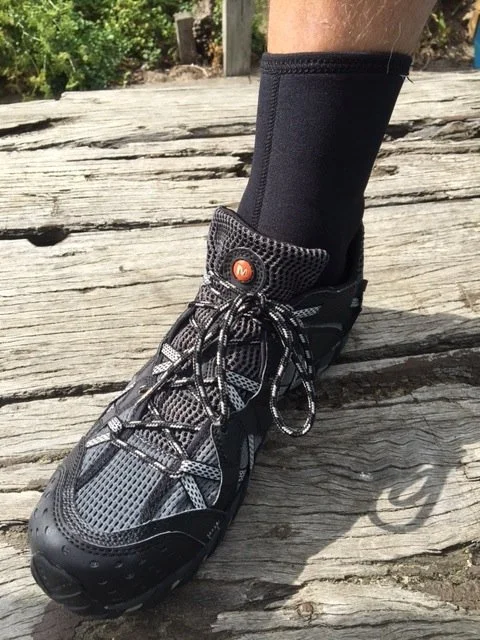
Some sturdy old runners are good enough (here paired with neoprene socks)
Water Shoes & Boots I Recommend
Astral Designs Hiyak Boots
I’m currently onto my third pair of Astral Designs Hiyak boots, and they remain one of my favourite paddle footwear options.
I’ve used them for:
Whitewater kayaking
Flatwater paddling
Ocean paddling and surf skis
Sea kayaking
They offer:
Excellent grip
Strong foot support
Protection on rough ground
Great ankle coverage
Good protection from sand and gravel
Flap covering the shoelaces to keep them contained
They also work a bit like a gumboot (height above the ankle), helping keep debris out.
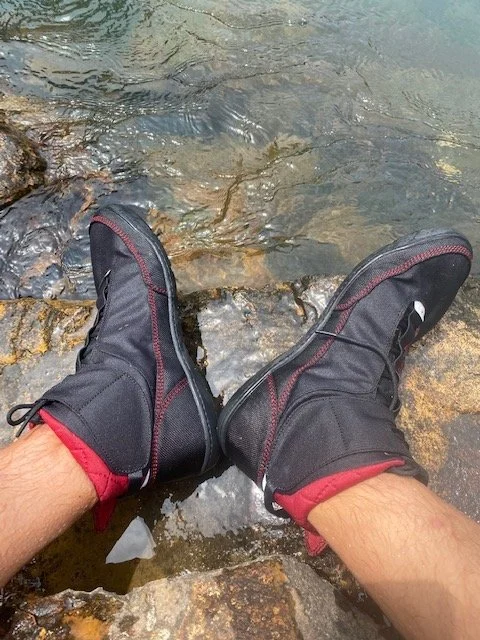
Astral Designs Hiyaks - great grip on rocks
The downside? They don’t dry quickly. However, they drain well, and for me the performance outweighs the drying time.
Astral Designs Loyaks
I’ve also used and recommended the Astral Designs Loyaks for years. They regularly appear in “Top 10 Water Shoe” lists online, and for good reason.
They are lightweight, comfortable, and drain well.
However, I personally don’t use them much anymore because I spend a lot of time paddling in colder environments. When paired with thicker socks, dry pants, or a dry suit setup, I find the heel can collapse slightly and the shoe may slide off more easily.
In warmer climates, they are fantastic.
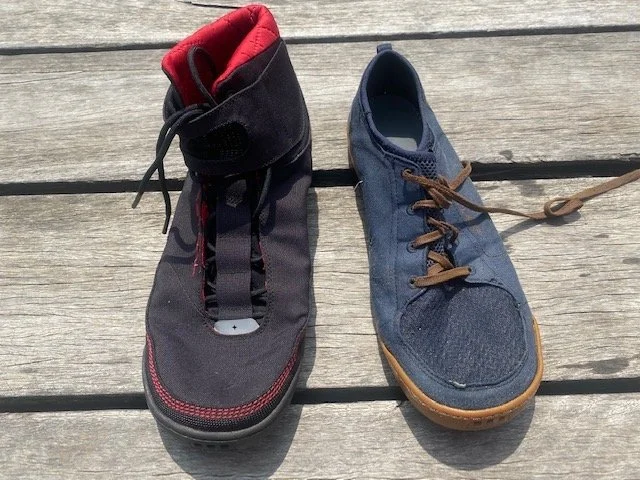
My Hiyaks and Loyaks for comparison - both well used!
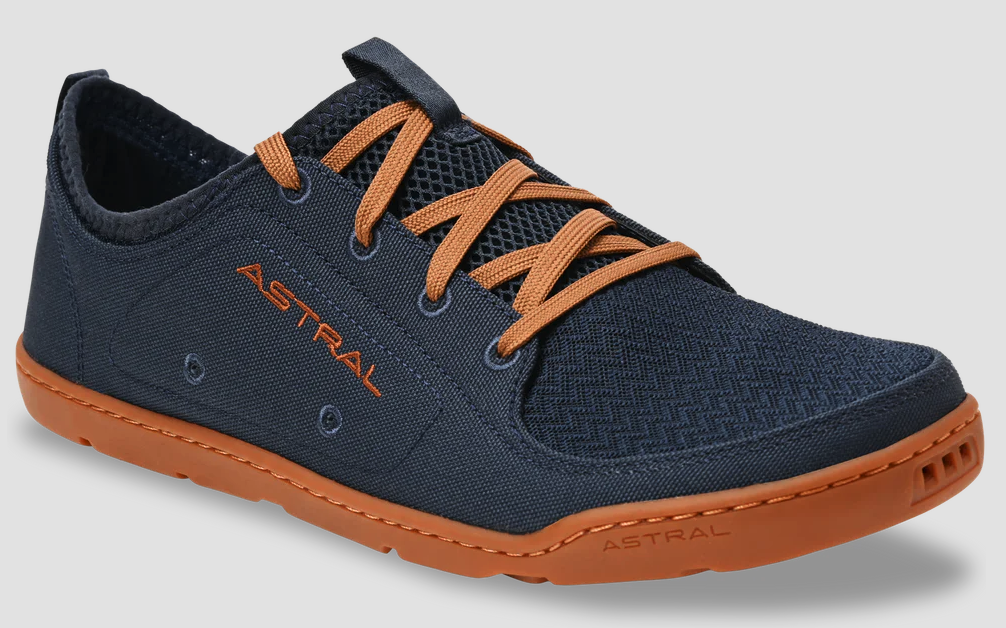
Astral Designs Loyaks - available in Men’s & Women’s sizes in a variety of colours
Neoprene Boots
Many of our clients love low-cut and high-cut neoprene boots, and they absolutely have their place in the industry.
They are:
Warm
Comfortable
Easy to use
Popular in colder water conditions
Personally, I prefer footwear with better drainage and laced entry systems rather than slip-on neoprene boots. Slip-on styles can trap water — what many paddlers call “bootie juice.”
That said, neoprene boots such as the NRS Kicker Booties and NRS Freestyle Wetshoes remain one of the most popular choices for recreational paddlers.
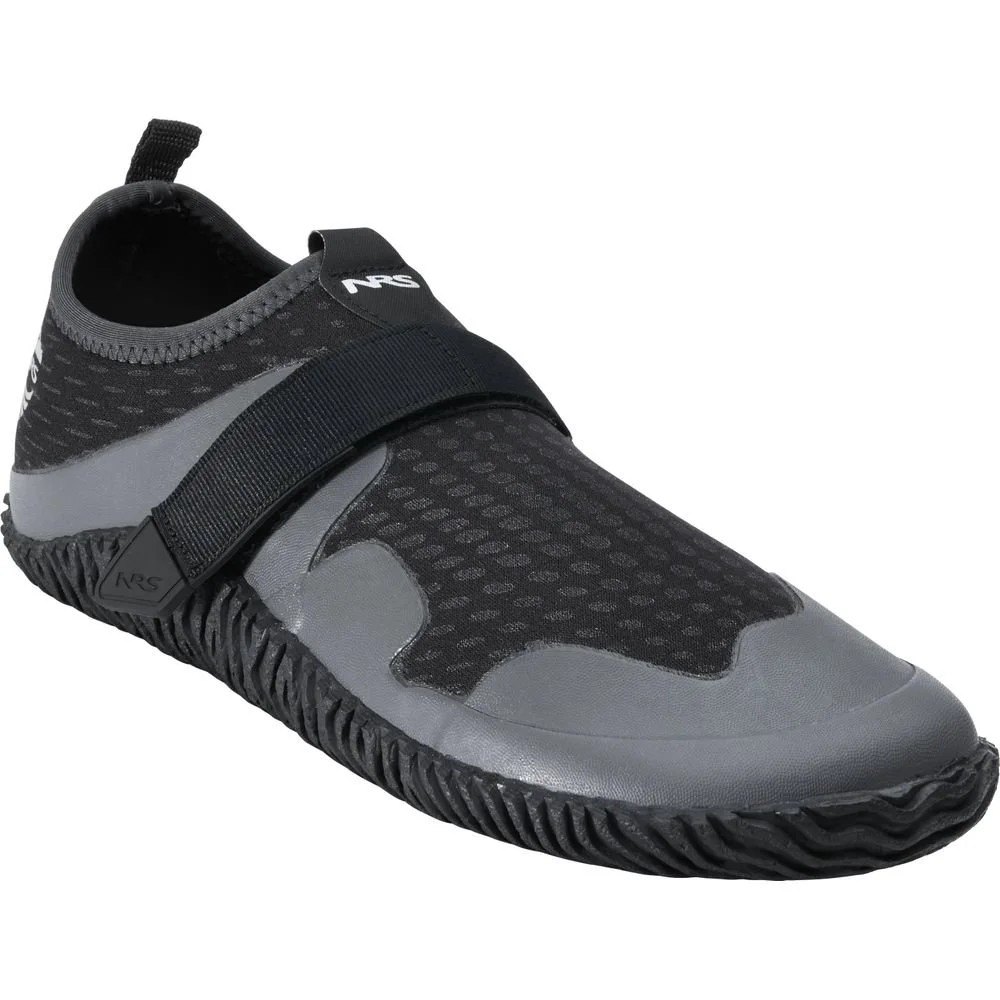
NRS Kicker Booties
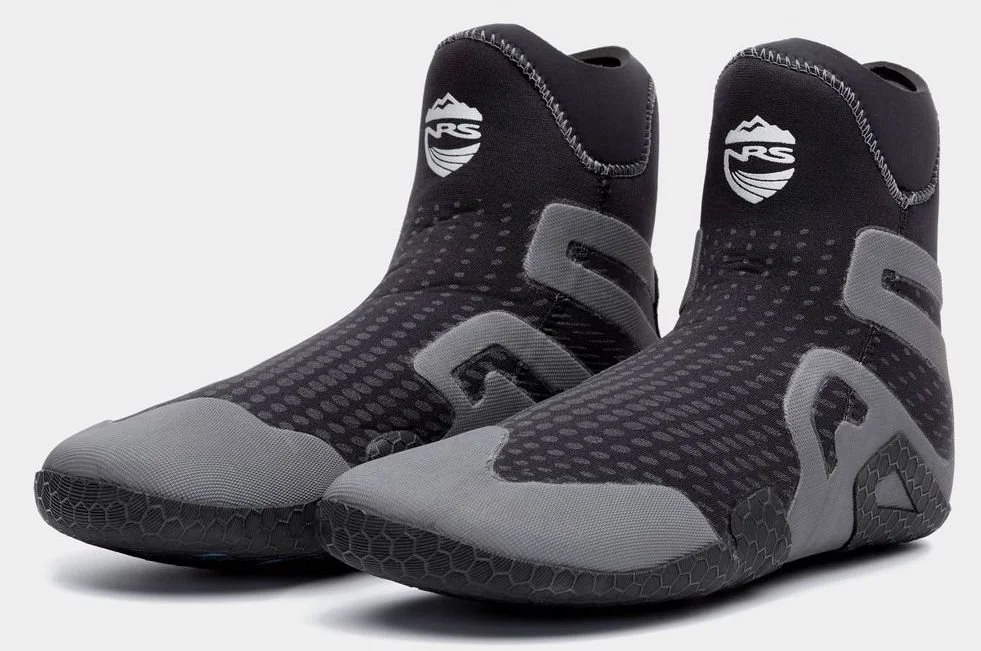
NRS Freestyle Wetshoe
NRS Boundary Boots
There’s also definitely a place for the NRS Boundary Boot.
Some of our hardcore Tasmania gold seekers use and absolutely love these boots, especially in cold, wet, rugged environments where warmth and protection are priorities.
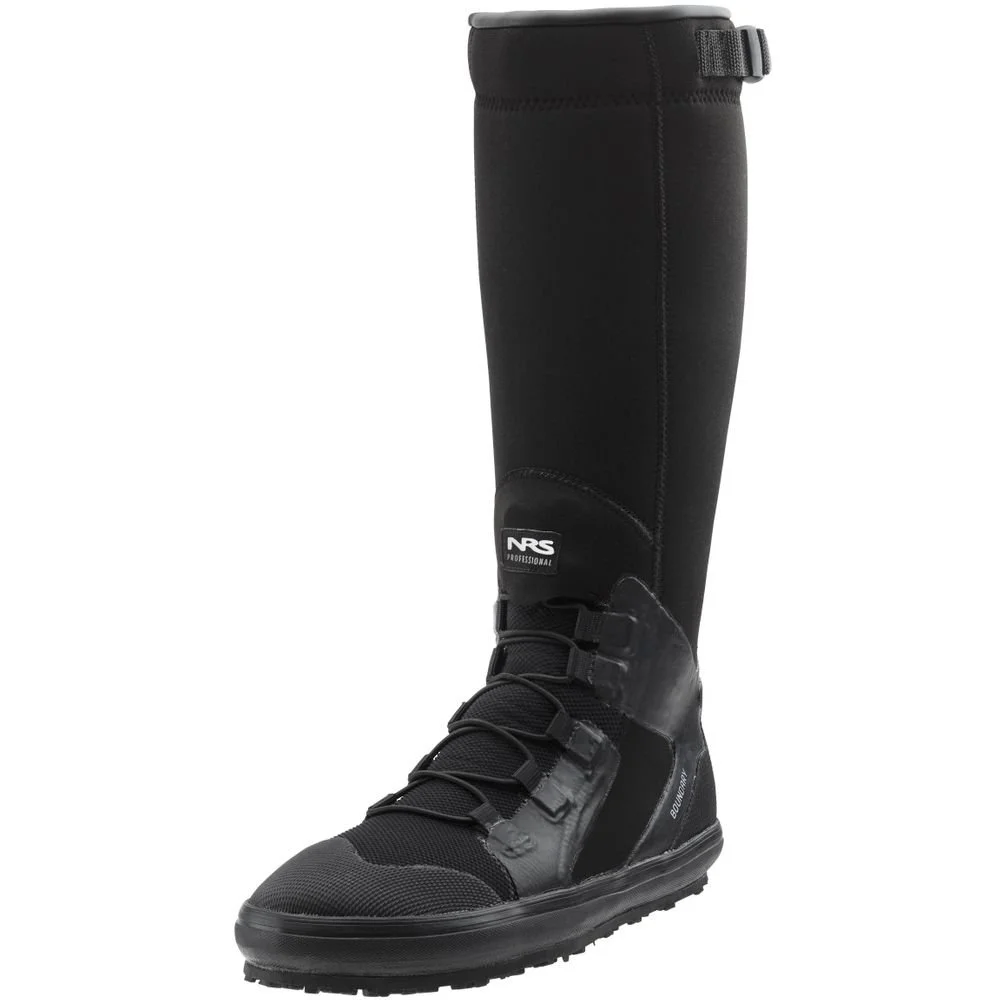
NRS Boundary Boots
Warmth vs Footwear
Warmth is important, but in many cases it’s less about the shoe itself and more about the sock system you pair it with.
That’s one reason neoprene footwear remains popular.
Personally, I prefer adjusting warmth using different types of socks while keeping footwear focused on support, grip, drainage, and protection.
And that will be the topic of the next blog.
Stay tuned…