
Socks & Sock Systems for Whitewater, Sea Kayaking, Surf Skis, SUP, Rafting, Canoeing, Kayaking & Fishing
Who would have thought I’d become an expert on paddle sports socks and layering systems?
One thing comes first: never wear cotton outdoors. “Cotton kills” exists for a reason. Once cotton gets wet, it stays wet, gets cold fast, and robs your body of warmth. Your old everyday Bonds socks are out straight away — and the same goes for cotton jocks and underwear as well, before woollen and fleece underwear it was considered bad luck to wear underwear during paddle sports.
I’ve been paddling since 1996, and one thing I’ve learned is that I do not like wet feet.
In the height of summer, when the water is warm, I’ll sometimes skip socks altogether. You can look a bit funny wearing dry pants or a dry suit in summer! But if the water is dirty — and most rivers and bays can be a little suspect — I still prefer some protection from pollution. Most of the time I just wear my Astral Designs Hiyaks for almost every paddle sports application.
In warm/cooler conditions, I’ll wear a good pair of wool socks. In warmer or tropical environments, I love my Bridgedale Coolmax socks. They dry out quickly, do not smell, and most importantly protect my ankles from sandflies, mosquitoes, insects, and even sun exposure.
When conditions turn cold, I go straight back to my dry pants or dry suit setup — but that’s another blog entirely.
My Paddle Sock Layering System
My layering system usually looks like this:
Wool socks as the insulation base layer
Hiyaks to complete the system
Most of the time this keeps my feet dry and warm. But leaks happen and perspiration... When the wool socks do get damp/wet, wool still performs remarkably well because it keeps insulating even when soaked. At that point, the whole system effectively becomes a wetsuit for your feet.
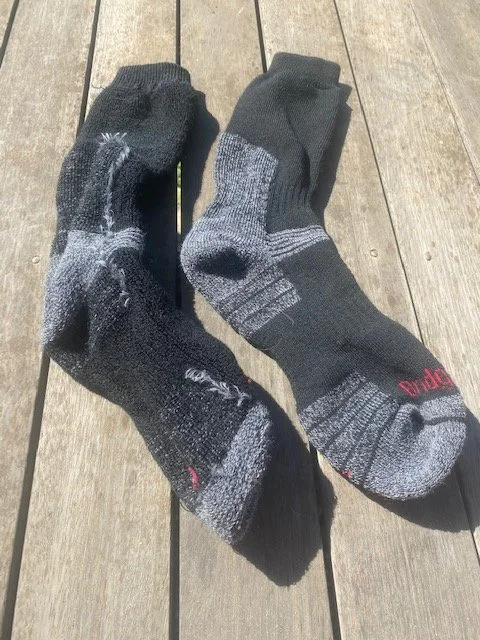
I love my thick woollen socks under my drysuit/dry pants.
Other Sock Options
Most paddle socks require water shoes over the top to protect both the socks and your feet. You don’t want to ruin your socks in gravel carparks or pucture them with sharp objects on the beach.
Short Neoprene Socks
The Adrenalin 3mm Neoprene Socks are cheap and cheerful. Vaikobi 2mm Neoprene Socks are more shaped (seam placement) and a little more expensive.
Personally, they’re not my favourite. They tend to turn your water shoes into neoprene booties and work by creating what paddlers call “boot juice” — a layer of warmed-up water trapped around your feet.
They work, but they’re not especially comfortable for long days.
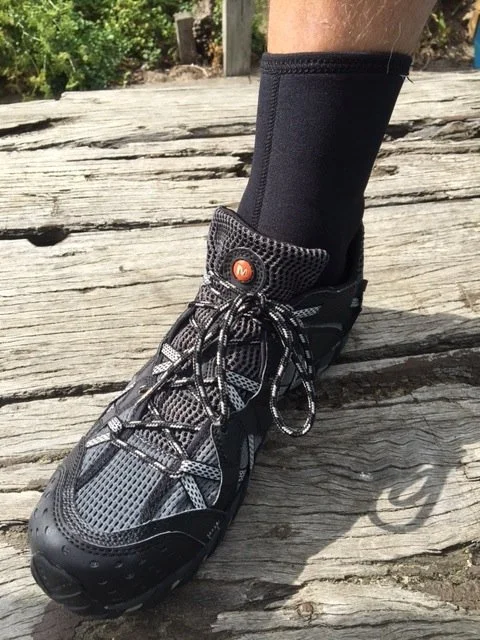
Cheap & cheerful - old runner with Adrenalin Neoprene socks.
Long Neoprene / Semi-Dry Socks
The NRS Boundary Socks with HydroCuff try to keep your feet dry. In reality, nothing stays completely waterproof forever.
Neoprene also isn’t the best insulator on its own. If your body can’t keep generating enough heat, your feet can still get cold.
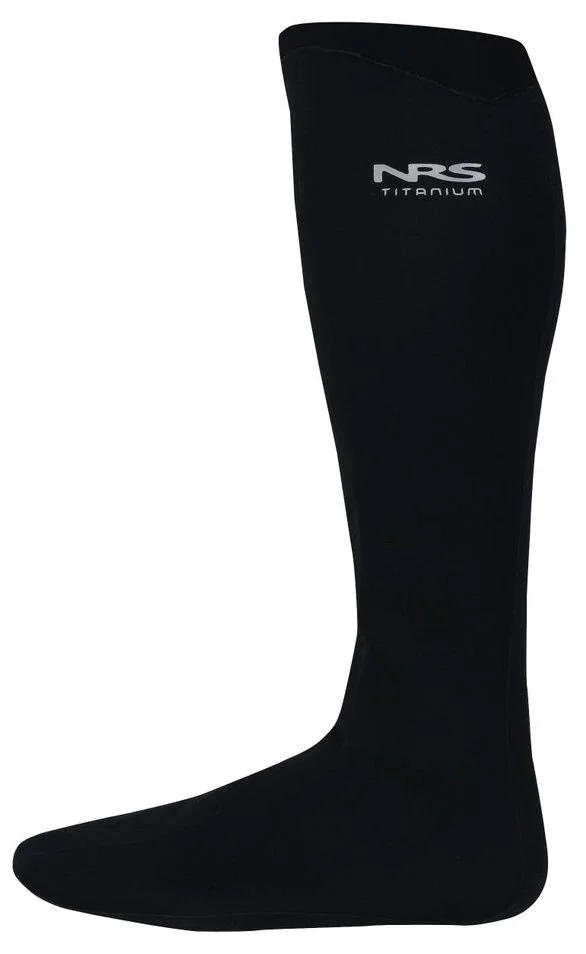
Boundary socks with hydrocuff seals under the knee.
The Best Wet & Cold Option
For genuinely wet and cold paddling, the standout option is the Reed ChillCheater Aquatherm Fleece Knee High Socks.
These socks have a waterproof polyurethane material (Aquatherm) combined with a fleece inner layer. Fleece performs exceptionally well when wet and continues insulating far better than neoprene in many situations. They still have limits in prolonged cold exposure, but overall they are one of the warmest wet systems I’ve used.
Sharkskin Chillproof T2 Socks are an ankle socks with the warmth of fleece, but without the waterproof outer. They will keep your feet warm when wet (up to a point) but will not keep them dry. Still a good optioon for those who prefer fabric over neoprene.
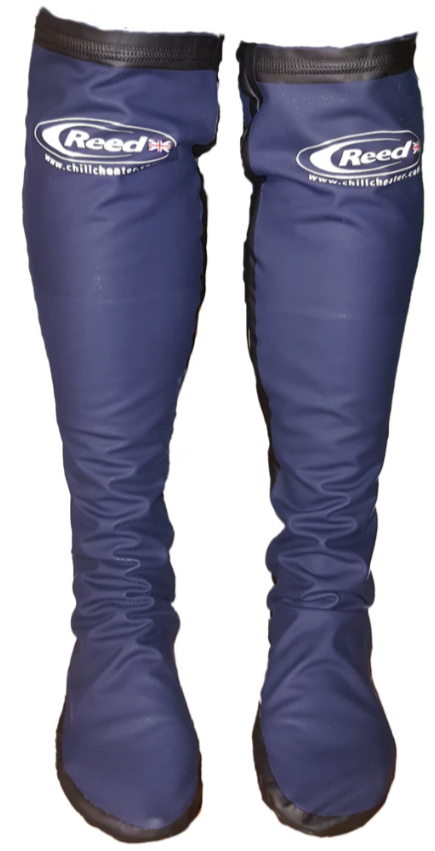
Reed Chillcheater Aquatherm Fleece socks.
The Best Solution: Staying Dry
Ultimately, the best option is simple: don’t get wet in the first place.
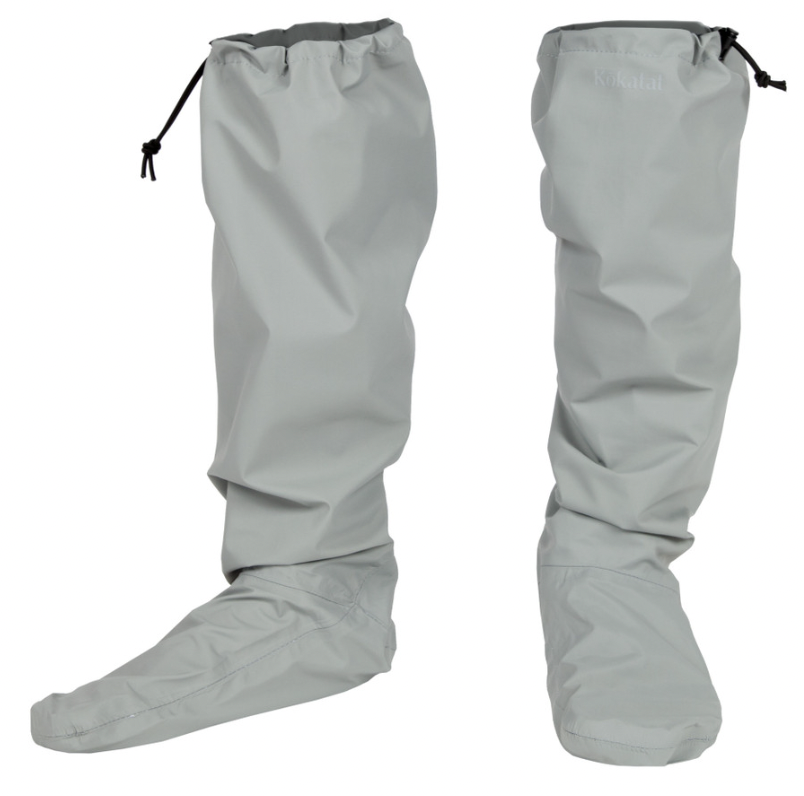
That starts with the Kokatat Hydrus 3.0 Launch Socks — or better still, a proper dry pants or dry suit system.
That setup deserves its own full write-up — and that’ll be the next blog.
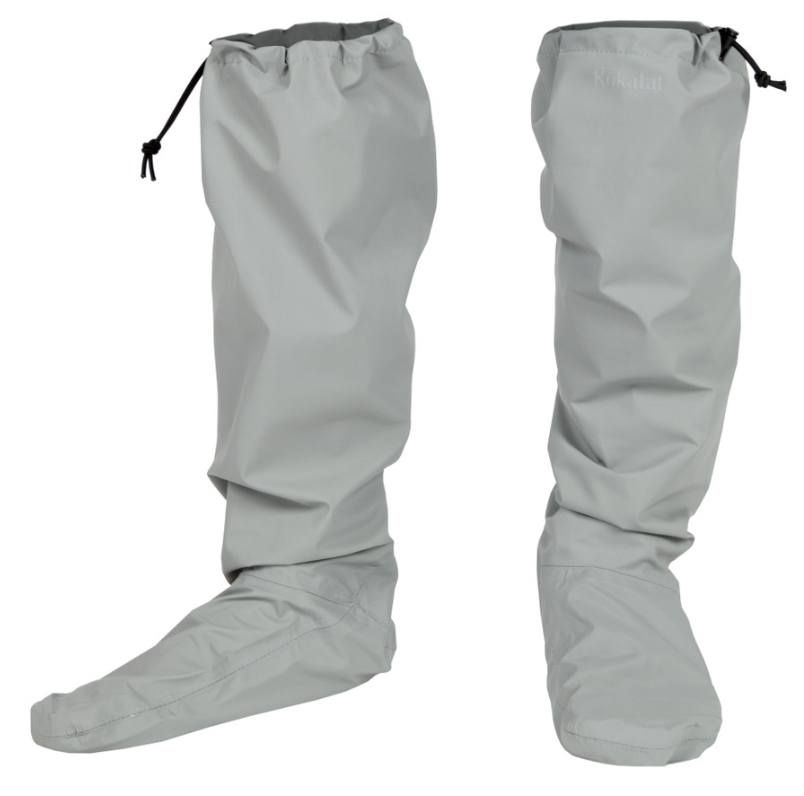
Kokatat Launch Sock - like the lower part of dry pants! They toggle below the knee.