
Recreational Paddling, Surf Ski & Ocean Kayak, Sea Kayaking, Touring, Sport Touring & Expedition Kayaking
This could be a controversial introduction… but my views are always changing the more I paddle!!!
There are no rules.
The kayak world loves telling people what is “correct.” Paddle this. Paddle that. Use this blade. Don’t use that blade. And you needed a shorter length….and with that type of paddle you are not going to get the full potential of the craft….
But paddling is personal. Your body, your technique, your goals, your spirit journey on the water — they all matter.
Follow your intuition.
Shop Our Range of Paddles
https://kayakshopaustralia.com.au/kayak-paddles/
Blade Styles
Greenland Paddles
Traditional, smooth, elegant, technical, beautiful.
Greenland paddles are incredibly popular at the moment.
You can build your own, or buy beautiful modern carbon fibre Greenland paddles, and people get very excited about them — some even claim they are the best paddle ever made.
And honestly… they’ve been around for thousands of years.
The original Greenland kayak was a hunting kayak — used for transport, survival, and life on the ocean.
Greenland paddles have their own unique technique altogether, which is great fun to learn and develop. However, you can also paddle them using what I call more modern Greenland techniques. And some will think you will not be able to unlock the craft’s full potential with a green land paddling…again that's people’s options only.
I love introducing beginner and intermediate paddlers to Greenland paddles. It’s always good fun, and people are often surprised at how smooth and efficient they feel.
We love the Gearlab IPIK, Kallaq and Akiak paddles as well as the adjustable length Kaja Sport Inuksuk.

Gearlab Kalleq in Illusion Yellow
Euro Paddles
Low Angle Touring Paddles - Efficient, relaxed, long-distance comfort paddling.
Modern traditional touring paddles are generally low-angle paddles. These usually have longer, thinner blades, loosely inspired by older Greenland paddle concepts. Low-angle paddles are extremely popular in North America — and I love paddling in North America!
They encourage a relaxed paddling style, efficient cruising, and long-distance comfort.
Perfect for:
Recreational touring
Long relaxed expeditions
Energy efficiency
Casual distance paddling
However you can still use a High Angle paddling technique with these.
Examples:
Werner Camano
Werner Kalliste
Aquabound Tango
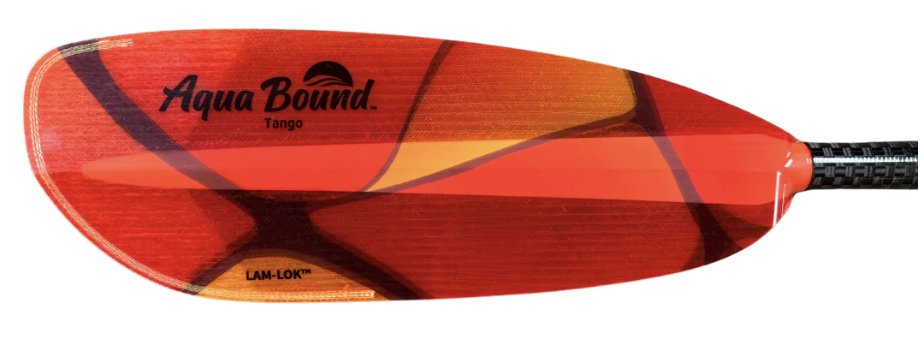
Aquabound Tango
High Angle Touring Paddles - Control, stability, confidence and power.
If you are buying your first serious paddle, this is usually my recommendation. High Angle Euro paddles generally have shorter, wider blades designed for a higher-angle stroke.
For beginner and intermediate paddlers, I believe they offer the best combination of:
Control
Stability
Power
Confidence
They make learning:
Basic strokes
Bracing
Turning
Stability
Surf handling
Leg drive
Torso rotation
…much easier.
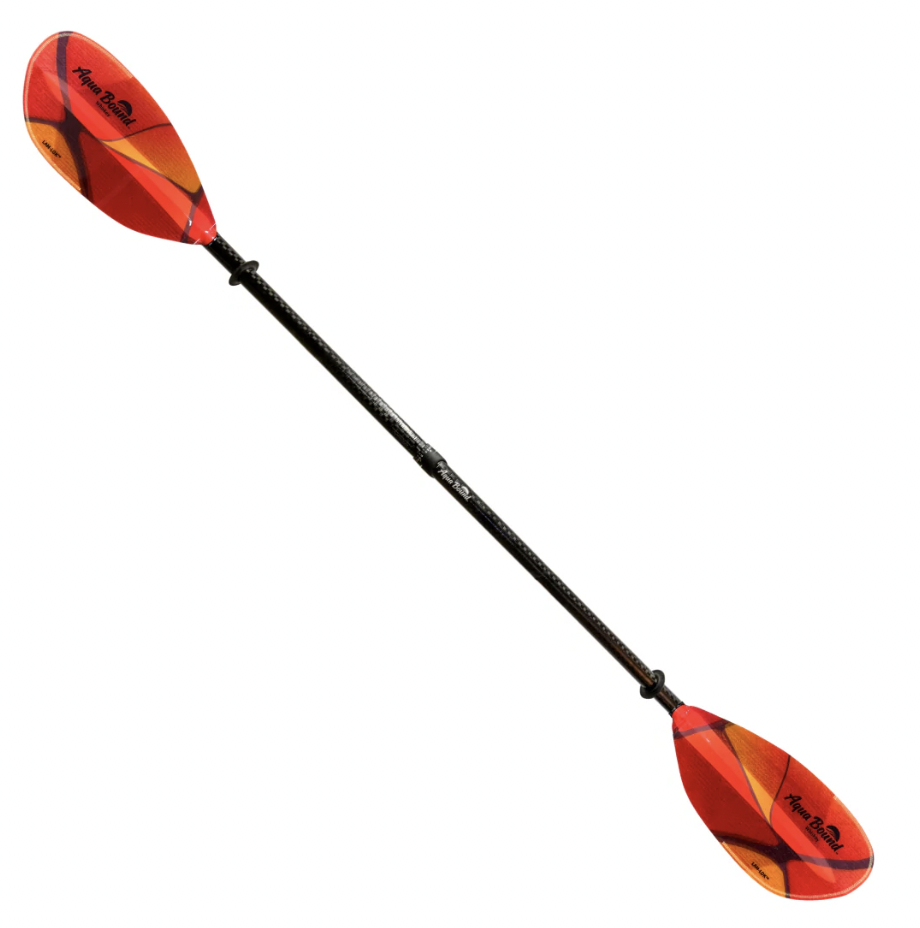
Aquabound Whiskey - fibreglade blades, carbon-fibre shaft
My recommendation is to start with a high-angle paddle until you develop a really solid understanding of boat control and technique.
And you can importantly use a low angle paddling technique
Then later, if you want to experiment, move into wings, Greenland paddles, or whatever calls to you.
Remember… NO RULES!!
Examples:
Werner Shuna
Werner Cyprus
Werner Tybee
Braca Hurricane
Aquabound Whiskey
Aquabound Manta Ray Hybrid
Kokopelli 4-piece Alpine Lake
Kokopelli 4-piece Poudre Adventure
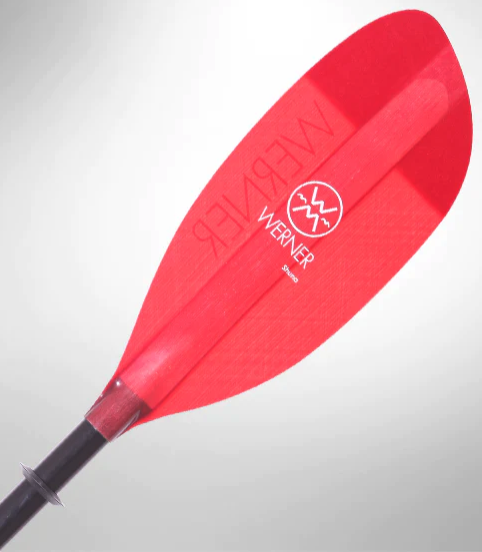
Werner Shuna
Wing (Propeller) Blades - Maximum forward efficiency and speed.
These are the race pace paddles. Designed for:
Speed
Racing
Downwind paddling
Covering huge distances efficiently - Expeditions
They are extremely effective when used well. However, significantly, if not used correctly - to the detriment of your paddling. If your technique is not developed, wing paddles can actually slow you down dramatically and then you may also struggle with stability and control
Wing paddles are very popular with:
Sports touring paddlers
Surf ski paddlers
Expedition paddlers
Fitness paddlers
Particularly where you are paddling:
Fast island-hopping expeditions such as Bass Strait! 223km trips over 8–12 days
Long crossings
Big distance days
Down wind paddling
Racing
Fast Touring
Wing paddles offer incredible forward efficiency and stability, but they can limit manoeuvrability and fine control.
And here’s the important part: you can self-rescue and roll with them — absolutely — but it is generally more difficult.
Again… no rules.
Examples:
Braca Sport Braca IV
Braca Sport Braca XI Van Dusen
Carbonology Sport Paddles (CS2, CS3)
Australian Paddlesports J-Series
Mixing Paddle Styles
Some clients paddle surf skis with Greenland paddles.
Others use high-angle Euro paddles for expedition touring.
And you might get a few funny looks sometimes…
But don’t give in to peer group pressure or the idea that there is only one “right” way.
Be strong.
Experiment.
Follow what feels good. And create the control and the stability that you need and require, the famous saying stability before ability when it comes to choosing the right craft!
NO RULES!!
Carry Two Paddles - Spare paddles - Up *#!$ Creek without a paddle…
I strongly recommend carrying two paddles for coastal and offshore paddling.
In Victorian waters, carrying a spare paddle is considered minimum safety practice and aligns with:
Paddle Australia recommendations
Victorian Sea Kayak Club expectations
Safe Transport Victoria - required by law if you 2 Nautical mile of shore in waters
A good setup is:
Your first paddle - 2 piece paddle that you allows you to work out your preferred length and feather angle, length and feather angle that you like-
And then it becomes your 2-piece spare paddle
Adjustable-length paddles are also fantastic and recommended.
Paddle length itself is a whole discussion (see below) — and trends are constantly changing. . In some circles, paddle lengths are getting shorter and shorter these days! And possibly too short for some environments and situations!
The Paddle Is Your Most Important Piece of Equipment
Many people believe the paddle is the most important piece of kayaking equipment.
And honestly… I agree.
I collect paddles — maybe a little uncool! — but I genuinely love them.
Different paddles teach you different things.
Different paddles change how you move through the water.
I’m always happy to show people what I use personally, what I use commercially and what works for different conditions and paddlers.
And remember one final time…
THERE ARE NO RULES.
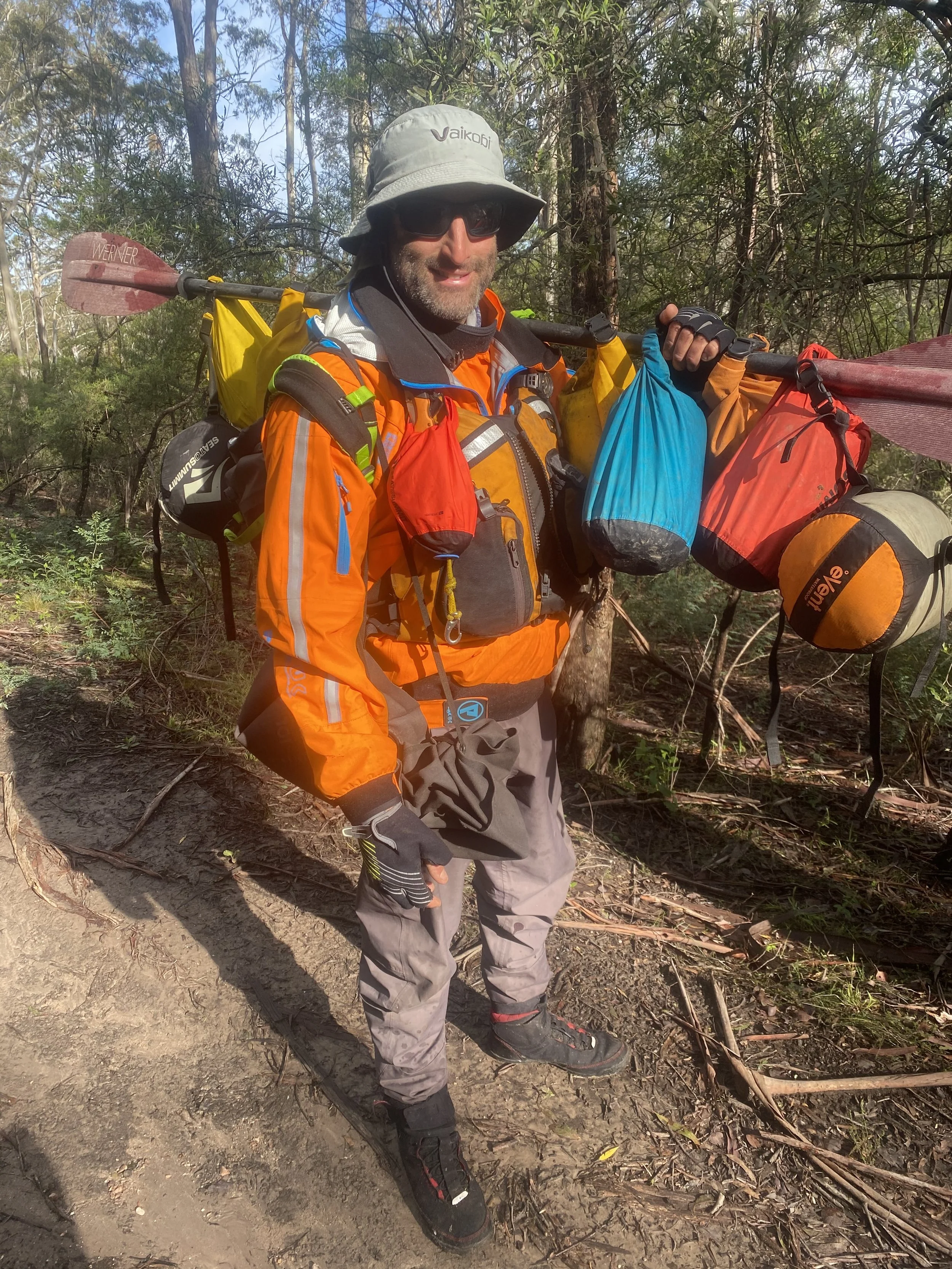
My favourite one-piece paddle - Werner Shuna 220cm. One piece paddles are solid and go the distance.
One Piece, Two Piece & Four Piece Paddles
One Piece Paddles
If your life truly depended on your paddle a one-piece paddle is the one you want.
Strong. Simple. Reliable.
No joins. No movement. No weak points.
I once watched footage of French paddlers climbing and abseiling into massive waterfalls to paddle 100-foot drops — and they would only trust one-piece paddles. Sea kayak touring and surf skiing is generally not that life-dependent!
Still, I absolutely love my one-piece paddles.
One of my one-piece paddles has outlasted four separate two-piece paddles that wore out. Now I just keep that paddle for those special occasions
That said, I still use two-piece paddles regularly for commercial guiding and travel.
Two Piece Paddles
Two-piece paddles are incredibly popular for good reason. They are:
Easier to transport
Easier to travel with
Easier to store
Adjustable on many modern systems
And importantly, they let you experiment with:
Paddle length
Feather angle
Different setups and conditions
For most recreational sea kayakers and expedition paddlers, a high-quality two-piece paddle is probably the sweet spot.
Four Piece Paddles
Four-piece paddles are cool as. I do own one but have never used it in anger, but they make a lot of sense for:
Whitewater kayaks
Small expedition hatches
Spare paddles
Air travel
Because they pack down so small, they fit beautifully inside compact kayaks: generally for a white water playboat, river running or creek craft kayak or canoe.
The downside?
More joins.
More moving parts.
More things that can wear out or fail over time.
Still — they absolutely have their place.
Shaft Materials
Alloy / Metal Shafts
Old-school metal shaft paddles are:
Heavy
Cheap
Durable-ish
Cold on the hands in cool environments
And once bent… they generally stay bent!
But honestly? If you ask around your local kayak club or paddle shop, you can sometimes score an old one for almost nothing.
They often come with funky blade shapes and absolutely wild feather angles from another era of kayaking…
But for someone just getting started, they still work perfectly fine.
You do not need an expensive paddle to begin paddling.
Composite - Fibreglass and Carbon,
New age, super stiff with a touch of flexibility, and for me most importantly, composite shafts are warm on the hands even in cold environments'.
Fibreglass shafts are much cheaper than Carbon, and carbon after many knocks can just break: “I was only paddling along normally” …
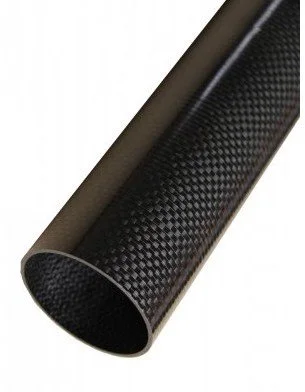
Carbon shaft - composite shafts come in various widths and thickness
Blade Materials
Plastic
Snap and crack! I use them for my tour & schools fleet and they receive a lot of punishment! If only reinforced plastic was a little cheaper, I would prefer to use that instead.
Reinforced Plastic - Probably too flexible, but when I am guiding they are great. I do not need high performance, and it would take a lot to break them.
Examples are the Werner Tybee, Aquabound Manta Ray Hybrid and Aquabound Manta Ray Carbon (in the latter the plastic is reinforced with carbon-fibre)
Fibreglass - Great, all my favourite paddles are fibreglass blades.
Examples: Werner Shuna, Werner Camano, Aquabound Tango, Aquabound Whiskey, Kokopelli Poudre Adventure.
Carbon - Dreams are free, if you can afford them, get them you only live once. Carbon blades are amazing but same as a for a carbon shaft - many knocks and they can just break, “I was only paddling along normally…” (those knocks accumulate!)
If you could afford the first one you can afford a second, and possibly the third one…
Examples: Braca Hurricane, Werner Camano Carbon and most wing paddles - Braca IV, Braca XI, Carbonology, APS J-Series, Greenland paddles by Gearlab and Kajak Sport.
Paddle Length
Now this gets exciting…
And controversial!
Some paddlers have radically strong opinions on paddle length.
Personally? I like longer paddles. (To the disgust of some people!)
For me, the paddle is not just for propulsion. It is a tool for:
Stability
Control
Bracing
Environmental management
Rough water confidence, especially in dynamic ocean conditions.
There are many paddle length calculators online, and the Sender app has a pretty interesting one that already upsets a few people! Calculators are just a starting point.
Technique, kayak width, paddling style, body height/arm length and environment all matter.
When selling paddling to beginners and intermedia paddlers we use the Werner Paddles Length Guide (below) for helping our clients chose the length of paddle best suited to them and their craft.
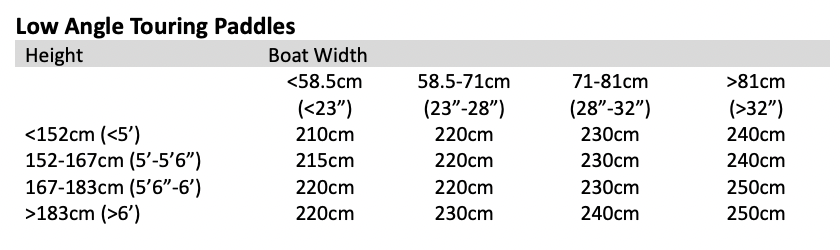
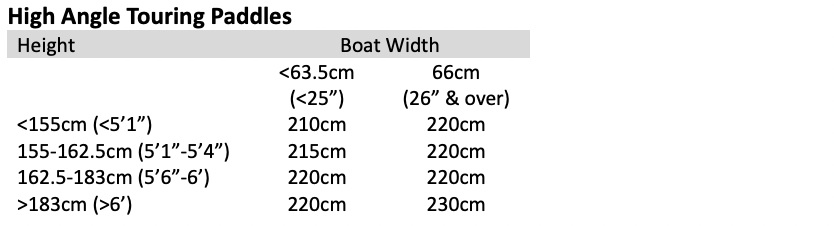
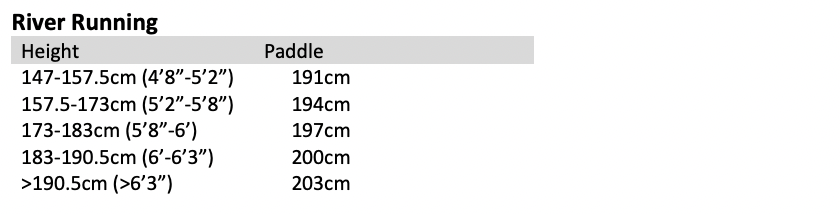
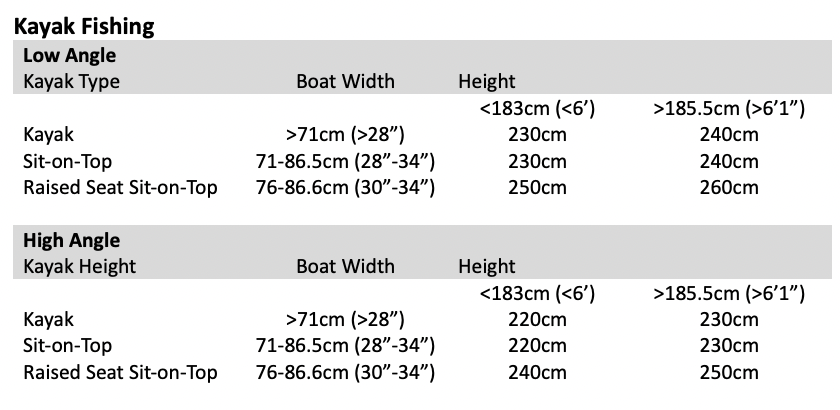
Source: Werner Paddles
Feather Angle
Another fascinating topic.
Traditional Greenland paddles from thousands of years ago were zero feather — both blades aligned the same way. Then modern kayaking arrived, and people became very excited about feathered paddles.
60-degree feather became common because the upper blade slices through the wind more efficiently. If you are Olympic paddler Jessica Fox… I completely understand!
However, for recreational paddling and touring, control and stability are often more important than aerodynamic efficiency.
So many paddlers — myself included — have gradually moved back toward lower feather angles or even zero feather.
At first people looked at me funny… Then during lessons and rough water sessions, many started figuring it out for themselves.
Legendary paddler Oscar Chalupsky then publicly talked about using zero feather too.
Suddenly it became a little more normal!
Thanks Oscar…
Drip Rings
Some people get absolutely soaked paddling. Often it comes down to technique.
Drip rings can help keep you a little drier by stopping water running down the shaft into your lap.
Greenland paddles on the other hand… They can be very wet paddles!
Honestly, that is probably my biggest issue with them.
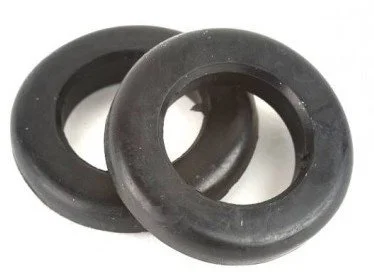
Drip rings fit over the paddle shaft
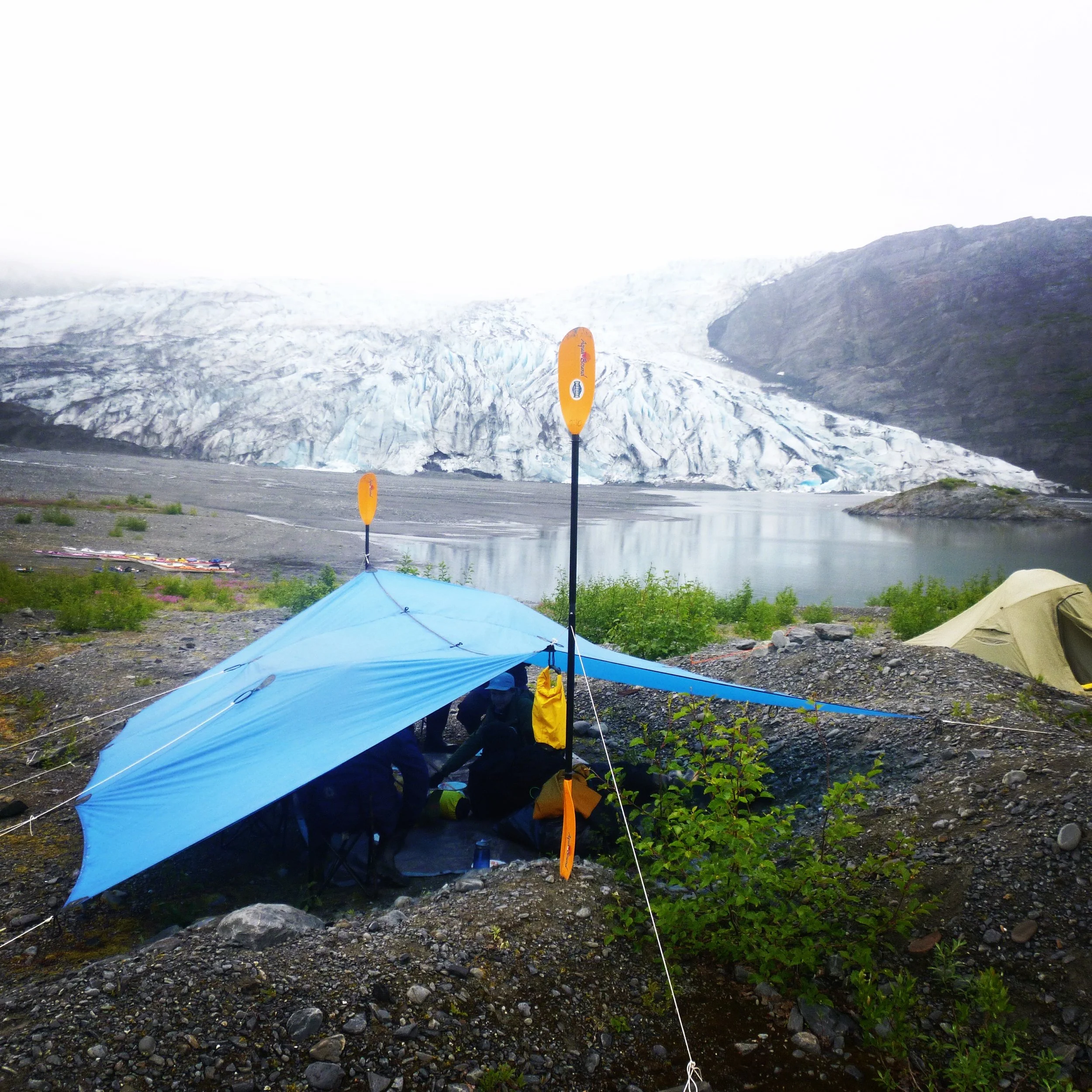
Paddles are useful for more than just paddling. Around camp they are a vital part of Tarpology - school trip to Alaska, Prince William Sound.
Final Thoughts
People often say the paddle is the most important piece of kayaking equipment.
And I would agree.
Paddles completely change:
How a craft feels
How power transfers
Stability / Control
Rhythm
Confidence
Efficiency
Even your personality on the water
I collect them — maybe a little loco!
But I genuinely love helping people discover what works for them personally.
So…
What are your thoughts?
What paddle setups do you love?
What feather angles are you running?
What weird combinations have you experimented with?
Let’s get a discussion happening below.
And remember one final time… THERE ARE NO RULES.